- Wearable sensors, IMUs, and physiological monitoring for non-invasive assessment of human motion, sleep, and cardiovascular activity.
- AI-driven diagnostic and assessment models for Parkinson’s disease and post-stroke motor recovery.
- Large-scale multi-sensor data acquisition and processing in clinical and real-world environments.
- Biomedical time-series analysis, sensor fusion, feature extraction, and machine learning.
About Me
I am Abdul Haleem Butt, PhD, an Assistant Professor and researcher working at the intersection of Artificial Intelligence, Bio-Robotics, Computational Neuroscience, Biomedical Signal Processing, and Assistive Technologies.
My research focuses on developing intelligent systems that combine artificial intelligence, wearable sensing, physiological data, robotics, and computational models of the brain to address real-world challenges in healthcare, rehabilitation, environmental monitoring, and human-centered technology.
1. Artificial Intelligence for Health and Biomedical Applications
A major part of my research involves the development of AI-driven methods for healthcare and biomedical applications. I work with wearable sensors, inertial measurement units (IMUs), physiological signals, and multi-sensor data to develop systems for objective human assessment and monitoring.
My work includes AI-based assessment and monitoring of neurological conditions such as Parkinson’s disease and post-stroke recovery, as well as research into elderly care, cardiovascular monitoring, rehabilitation, and personalized healthcare.
2. Computational Neuroscience and Bio-Robotics
My research also explores the relationship between computational neuroscience, neural dynamics, and robotics. I investigate biologically inspired models of neural circuits, synaptic plasticity, and motor control, with the goal of understanding how principles of the nervous system can inform intelligent and adaptive robotic systems.
This work includes computational modeling of cerebellar microcircuits, spiking neural models, brain-inspired control, sensory integration, and motor learning.
3. Environmental and Disaster Intelligence
Beyond healthcare and robotics, I apply artificial intelligence and remote sensing to environmental monitoring and disaster management.
My research includes deep-learning approaches for deforestation detection, wildfire and smoke classification, aerial imagery analysis, and intelligent disaster-response systems. These projects aim to transform complex environmental data into actionable information for early detection, monitoring, and response.
Overall, my research goal is to develop intelligent, human-centered technologies that move advanced computational methods from research environments into practical systems capable of improving health, safety, and quality of life.
Current Projects
Ongoing Projects spans several interconnected areas of artificial intelligence, biomedical engineering, neuroscience, robotics, and data science.
- Machine learning and deep learning for biomedical, image, time-series, and environmental data.
- Experience with CNNs, RNNs, LSTMs, transformers, and other modern AI architectures.
- Computer vision applications including object detection, recognition, and classification.
- AI applications in healthcare, robotics, environmental monitoring, and intelligent systems.
Academic Collaborations
Muhammad Usman Yaseen, PhD
Assistant Professor, Computer Science, CUI Islamabad Campus
Research Interest: Artificial Intelligence, Distributed Systems, Computer Vision
Email: usman_yaseen@comsats.edu.pk
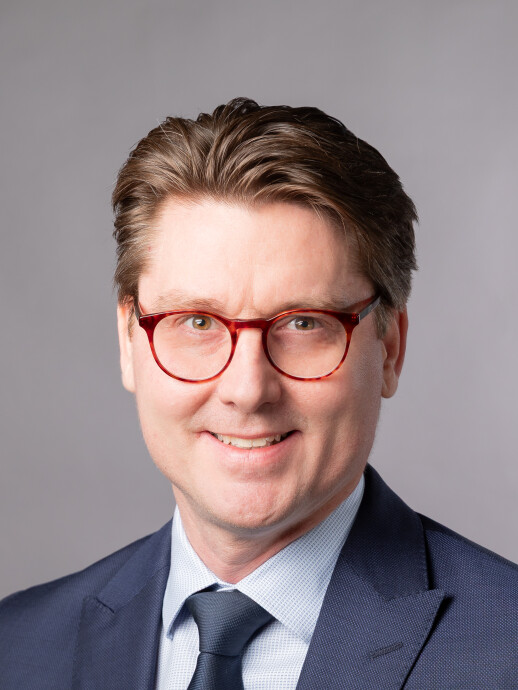
Tuomas Kiviniemi, MD, PhD, FESC
Tuomas Kiviniemi, MD, PhD, FESC, is Professor of Cardiology at the University of Turku and Chief Physician at the Heart Center, Turku University Hospital. His clinical and academic work focuses on cardiology, clinical trials, atrial fibrillation, coronary artery disease, percutaneous coronary intervention, anticoagulation, bleeding, and translational cardiovascular research.
Professor Kiviniemi completed his medical and doctoral education at the University of Turku and has further research experience from Brigham and Women's Hospital, Harvard Medical School. He is a principal investigator in the CAREFIB Consortium and the LAA-CLOSURE research program. His work combines clinical trials, translational research, biomarker studies, and outcome research, particularly in atrial fibrillation and cardiovascular interventions.
His current areas of expertise include atrial fibrillation, coronary artery disease, percutaneous coronary intervention, anticoagulation, bleeding, clinical trials, and translational research.
Email: tuoski@utu.fi
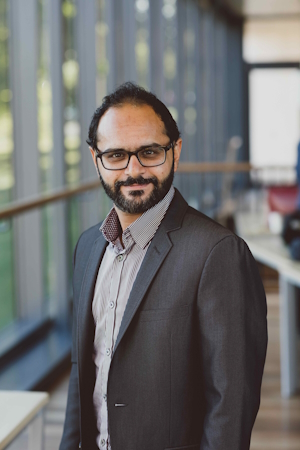
Dr Masood Ur Rehman, PhD
Dr Masood Ur Rehman is a Reader in Autonomous Systems & Connectivity at the James Watt School of Engineering, University of Glasgow, UK. He received his B.Sc. degree in Electronics and Telecommunication Engineering from the University of Engineering and Technology, Lahore, Pakistan, in 2004, followed by M.Sc. and Ph.D. degrees in Electronic Engineering from Queen Mary University of London in 2006 and 2010, respectively. He worked as a postdoctoral research assistant at Queen Mary University of London before joining the Centre for Wireless Research at the University of Bedfordshire and subsequently the University of Glasgow.
His research covers compact antenna design, radio-wave propagation and channel characterisation, satellite navigation antennas in cluttered environments, electromagnetic interaction with the human body, body-centric wireless networks and sensors, remote healthcare technologies, millimetre-wave and nano-communications, and Device-to-Device (D2D) and Human-to-Human (H2H) communications. He has worked on projects supported by industrial partners and research councils and has contributed to a patent, books, book chapters, and more than 120 technical articles in journals and peer-reviewed conferences.
Dr Ur Rehman is a Fellow of the Higher Education Academy (UK), a Senior Member of IEEE, and a member of the Institution of Engineering and Technology (IET) and the Bioelectromagnetics Society. His professional activities include editorial and reviewing roles for international journals, conferences, and research funding organisations. His research interests include RF design and propagation, remote healthcare technologies, wearable sensors and systems, body-centric communications, bio-electromagnetics, IoT, 4G/5G antenna design, climate-change monitoring using antennas and sensors, and terahertz applications.
Research interests: RF design and propagation, remote healthcare technologies, wearable sensors and systems, body-centric communications, bio-electromagnetics, D2D/H2H communications, antenna design for 4G/5G and IoT, wireless sensing, and nano-communications and terahertz applications.
Industrial Collaboration
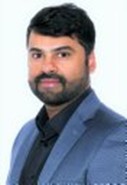
TAHA KHAN — Founder, CTO (Detectivio AB, Sweden)
PhD Computer Science Engineer, experienced researcher in medical applications of AI, deep neural networks, machine learning, computer vision and digital signal processing. Responsible for R&D and the technical development. Member of the board.
Email: taha@detectivio.com
Former Students
Master in AI Student: Ammar Ali Khan
Roll Number: 243242
Email: 243242@students.au.edu.pk
Master in AI Student: Jehanzeb Khan
Roll Number:
Email: jehanzebkhan1998@gmail.com
Primary Contact
Abdul Haleem Butt, PhD
Email: abbutt@unibz.it